

By Jenny Peterson
Charleston County EMS is recognized as one of the premier emergency medical systems in the nation, but its beginnings were far more humble.
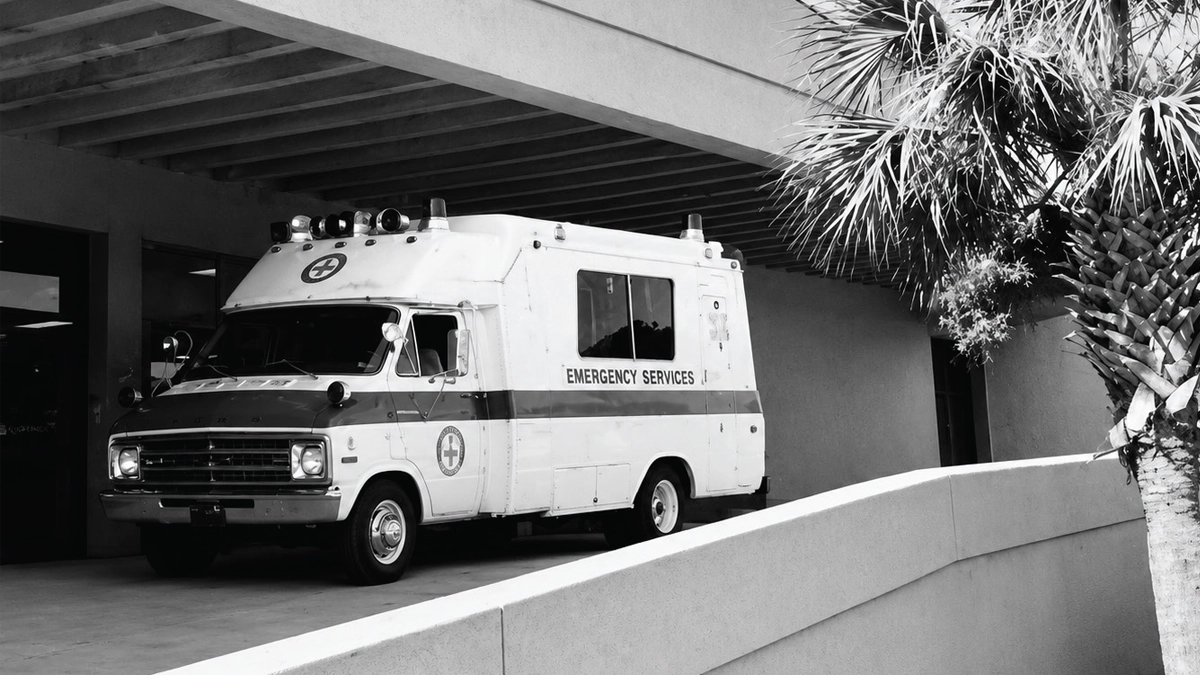
Before Charleston County established its first official Emergency Medical Services department in 1973, emergency transportation often fell to local funeral homes, which owned the only vehicles capable of transporting patients lying down.
Formal training standards for emergency responders back then were virtually nonexistent, and much of the work was learned through experience. The department was credited as being spearheaded by Paul Gelegotis, a local businessman who had an emergency and needed to wait on a “crash wagon” to arrive to take someone to the hospital.
He recognized the need for an organized, trained and properly equipped EMS service in Charleston. He worked with Charleston County Council and the Berkeley-Charleston-Dorchester Council of Governments to establish an EMS service in the local area.
The Birth of Charleston County EMS
When Charleston County created a county-run EMS department in 1973, it marked a turning point not only for emergency care, but also for the young men and women joining the profession.
“No one knew what an EMS was supposed to do because there were no books written on it,” recalled Don Lundy, who began his career as an ambulance dispatcher in Tampa, Florida, in 1975 and, in 2000, served as director of Charleston County EMS. “We stepped into the role of EMS when EMS didn’t know what it was supposed to be.”
Lundy remembers the excitement of payroll moving from $1.60 an hour to $3.75 an hour, along with health insurance and a pension.
“We thought we had hit the jackpot,” he said.
Locally, the transition presented a challenge: how do you train emergency responders when no established curriculum exists?
The answer came from the Charleston Medical Society.
Physicians Help Build an EMS System
As county leaders searched for guidance, they turned to the long-standing physician organization in downtown Charleston.
Three physicians affiliated with the Charleston Medical Society stepped forward to train the county’s first EMS personnel, providing the medical expertise needed to transform 15 ambulance attendants into skilled emergency responders.
Among those physicians was Dr. Charles Summerall III, a cardiologist at the Medical University of South Carolina who led the effort, Lundy said. Dr. Dabny Yarborough and Dr. Ray Invester also helped develop training programs that introduced responders to essential emergency care practices, including oxygen administration, patient assessment and trauma care.
Emergency Medicine in Its Early Days
In 1974, emergency medicine was still in its infancy. There were no certified paramedics, no statewide ambulance regulations, no cell phones or pagers and few nationally accepted standards. Paramedics in Charleston County first donned a high-neck button-up tunic, Lundy recalls, the uniform for the ambulance attendants, “like something a barber would wear.”
Across the country, innovations such as traction splints, spine boards and the Kendrick Extrication Device were just beginning to revolutionize patient care.
The Charleston Medical Society helped ensure local responders stayed connected to these emerging best practices. That collaboration between physicians and EMS professionals helped lay the foundation for a system that would eventually earn honors as the National EMS System of the Year in 2010.
Continuing a Legacy of Innovation
Today, Charleston County EMS is preparing for its next chapter with a new headquarters and training center in North Charleston, and Lundy is hoping for the training center to be named for Raymond Graham, the agency’s first director hired in 1976.
The center will serve as a place where new EMTs and paramedics can train while experienced professionals continue developing their skills throughout their careers.
It is a fitting tribute to an organization built on education and innovation. In anticipation, Lundy has been helping document the department’s history for the new center, highlighting the milestones, innovations and partnerships that shaped modern EMS in Charleston County.
For Lundy, the evolution of EMS has been remarkable to witness.
“Had EMS not evolved the way it did, trauma care and trauma centers would not have evolved. A lot of lives would have been lost,” Lundy said.
More than five decades after Charleston County created its EMS department, Lundy says the Charleston Medical Society remains an important partner.
“Until I retired in 2014, the Medical Society was still a group that when we had a new process or a new idea, we got them involved,” he said.
By helping train the county’s first emergency responders and providing decades of guidance and support, the Charleston Medical Society played a pivotal role in shaping emergency care in the Lowcountry.
The ambulances may be better designed, the equipment more advanced and the training more sophisticated than anyone could have imagined in 1973.
Yet the mission remains unchanged: bringing skilled medical care to people when they need it most.
More than 50 years later, the partnership between Charleston County EMS and the Charleston Medical Society continues to help save lives across the Lowcountry every day.