

Student-driven sensory spaces take shape at Alice’s Clubhouse
By Jenny Peterson
At Alice’s Clubhouse, innovation at the dementia-specific medical-model day center grows out of everyday moments, holistic attentiveness and a willingness to try something new.
When a doctoral-level occupational therapy student, completing her capstone project at the memory care center, noticed members becoming overwhelmed or anxious, the solution wasn’t medication.
It was a room. A quiet one.
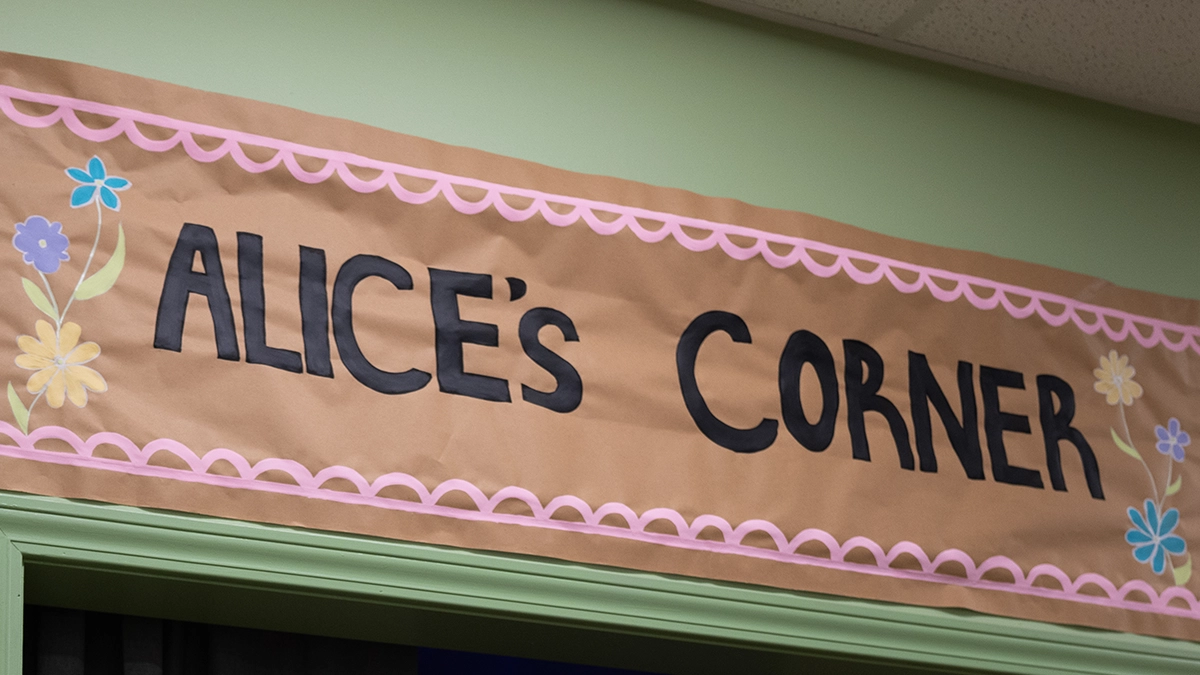
Alice’s Corner
With dim lighting, a glider rocker, recliner, aromatherapy and posters and artwork from the 1940s, the sensory room — now known as Alice’s Corner — offers members a place to reset.
“People with different forms of dementia often don’t do well when they’re overstimulated,” said Bonnie Cresser, Executive Director of the Mount Pleasant facility. “This is a natural way to help them calm down.”
For those living with dementia, cognitive decline or Parkinson’s dementia, that pause can be essential: a chance to regroup, breathe and return to the day on their own terms.
Every detail in the room is intentional, from the color of the walls to the lighting and layout.
Student-Led Innovation
Alice’s Corner is one of several projects born from the Clubhouse’s partnership with master’s degree students from the Medical University of South Carolina.
Since opening in 2019, the facility has welcomed students for hands-on learning, beginning with nursing students and expanding into a structured 14-week capstone program for occupational therapy master’s candidates.
“They are so energetic and empathetic to this population,” Cresser said. “Their encouragement of our members adds another dimension to our program.”
One master’s occupational therapy student designed the sensory room. Another created Alice’s Garden, a hands-on outdoor space that engages members through tactile activity and routine.
Dementia Care and Community
Despite its clinical capabilities, the Clubhouse feels more like a community center than a care facility. With more than two dozen members, the space is filled with conversation, activity and, notably, laughter.
“Coming to Alice’s Clubhouse allows its members to relate to others on a level that none of us can,” said David AvRutick, Founder and President.
It’s care that changes trajectories.
Staff have seen members arrive withdrawn or immobile and begin walking independently, re-engaging in conversation and reconnecting with daily life. In most cases, disease progression slows and quality of life improves dramatically.
“The Clubhouse gives people a purpose and truly brings joy…both to our members and to their families,” AvRutick said.
Support for Caregivers
Just as importantly, the Clubhouse supports caregivers.
By offering meals, physical, occupational and speech therapy, hair cutting, podiatric care, massage and other services in one place, it relieves families of the constant care demands that caring for someone with dementia requires.
The Clubhouse itself is built on experience. Named for AvRutick’s mother, Alice, who has Alzheimer’s Disease, it was created after her husband — her primary caregiver at age 80 — searched for a way to support her, and himself, while keeping her at home.
That mission remains the same: to support caregivers and create a place where people living with dementia can still live at home and retain their dignity, purpose and joy.
“As much as we see a positive change in the person with dementia, we see a similar change in caregivers and their families,” AvRutick said.
And in the process, it’s inspiring the next generation of care.