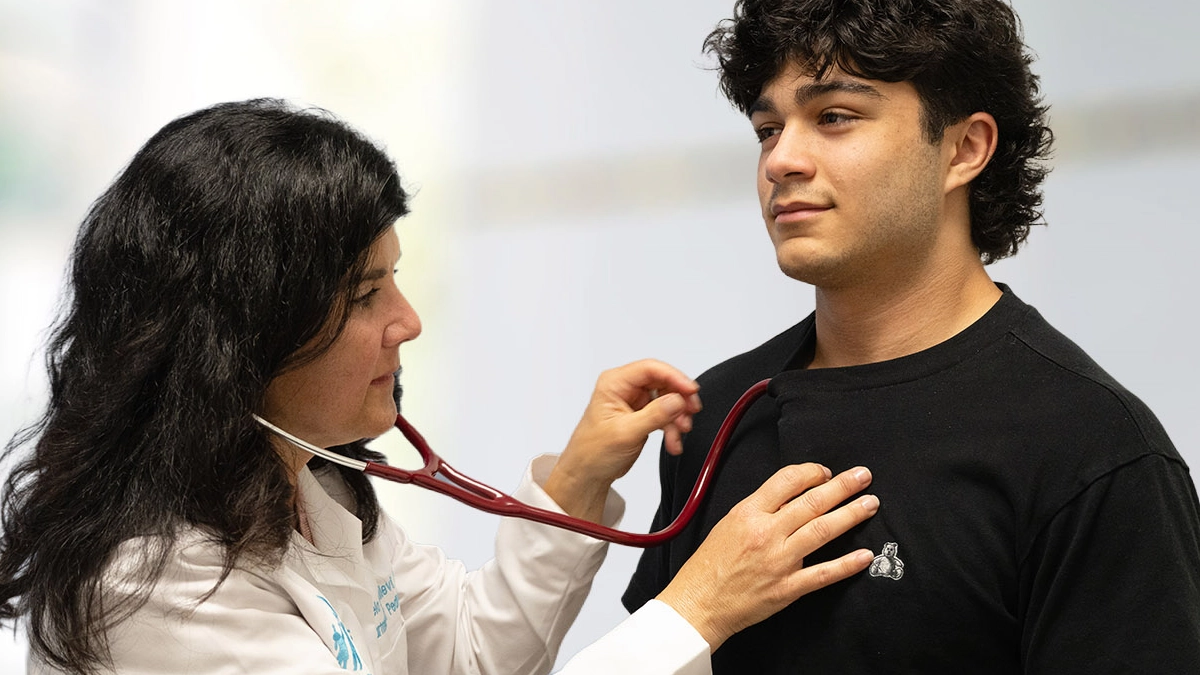


Required sports physicals help ensure student athletes are ready to compete — both physically and mentally
By Jenny Peterson
Before the first ball is kicked, thrown or caught, student athletes must first clear a crucial hurdle: a physician’s exam confirming they are healthy enough to play.
Beginning in seventh grade, every middle and high school student athlete participating in a school sport must complete a sports physical and receive medical clearance before competing in school-sanctioned athletics.
The evaluation helps ensure students can participate safely, examining everything from past injuries and musculoskeletal health to potential heart conditions. The exam is typically completed by a primary care provider during an annual wellness visit or at a dedicated appointment.
But it’s not just a physical evaluation of a child’s movement and heart rate — it’s a mental one as well.
In recent years, mental health screening has become an increasingly important component of sports physicals.
The recommendation for mental health screenings from the American Academy of Pediatrics comes as physicians nationwide report rising rates of mental health concerns among adolescents.
While sports and physical activity can often improve mood and mental health, the competitive nature of athletics can sometimes intensify stress for certain students.
“We all know the benefits of exercise and team sports,” said Dr. Angela Allevi, primary care pediatrician at the Medical University of South Carolina. “But competitive sports can also exacerbate anxiety or depressive symptoms for some students, so it’s important we screen for those issues.”
More Than a Basic Checkup
Sports physicals have evolved significantly over the past few decades. What once consisted of a few simple health questions and a quick heart check has expanded into a comprehensive screening.
“When we started these required physicals in the late 1990s and early 2000s, they were pretty primitive,” Dr. Allevi said.
“It was essentially, ‘Do you have asthma? Do you have heart disease?’ and clear healthy patients to participate.”
Today, athletes and families complete detailed medical history forms that ask about previous injuries, chronic conditions and family health risks. Primary care providers also perform a physical examination to evaluate joint strength, flexibility and balance.
In some cases, schools require additional documentation, such as concussion history forms, acknowledging the potential risks associated with certain sports.
Screening for Heart Health
One of the most critical parts of the evaluation involves identifying potential heart problems that could put athletes at risk during intense physical activity.
“Questions we ask include whether the athlete has any personal or family history of heart problems, symptoms of heart disease or a family history of heart attacks,” Dr. Allevi said.
Primary care providers also conduct a cardiovascular exam, and in some cases may recommend further testing such as an electrocardiogram (EKG) or referral to a cardiologist if concerns arise.
“These exams sometimes uncover things in a child’s personal or family history that warrant a specialist evaluation,” Dr. Allevi said. “However, it’s about making sure they’re cleared safely, rather than saying they can’t participate.”
Why the Primary Care Provider Matters
Ideally, sports physicals should be performed by a student’s primary care provider — someone familiar with the athlete’s medical history and family background.
“Their primary care provider knows their history, their family history and any existing conditions,” Dr. Allevi said. “That relationship helps guide the best advice for participation in sports.”
Healthcare access challenges sometimes lead families to seek quick physicals at urgent care clinics. While convenient, those visits may lack the full medical context primary care providers need to properly evaluate the athlete.
“Someone who doesn’t know the patient may only have 15 minutes to fill out paperwork,” Dr. Allevi said. “That really isn’t in the spirit of what these pre-participation physicals are designed to do.”
A Tool for Communication and Safety
Sports physicals also serve as an important communication tool between doctors, families, schools and coaches.
If a student has a medical condition — such as a seizure disorder, asthma or a heart condition — the exam can help ensure the school and coaching staff are prepared with appropriate safety plans.
“The goal is to make sure everyone is on the same page so students can participate safely and to the maximum of their ability,” Dr. Allevi said.
For families planning ahead, the timing of the physical matters. Students who want to play school-sanctioned sports in the 2026–2027 school year can begin completing their pre-participation physicals now.
Once completed, the clearance form covers the student for all sports participation that academic year.
“These exams really can make a difference,” Dr. Allevi said. “Not only do participation sports physicals help to identify risk factors, but they are another opportunity for primary care providers to connect with children and their families about injury prevention and overall health.”