

Measles Cases on the Rise in 2025
Measles was declared eliminated in the United States in 2000, but cases are now on the rise due to small pockets of undervaccinated populations, resulting in hospitalizations and even some deaths.
What the Latest Measles Statistics Show
Measles cases are on the rise in the United States in 2025, resulting in 1,024 confirmed cases, 128 hospitalizations and three deaths across 30 states as of this writing, already far surpassing the 285 cases and zero deaths reported in 2024, according to the Centers for Disease Control and Prevention.
Who Is Most at Risk for Measles?
Dr. Linda Bell, state epidemiologist and director of the Health Programs Branch of the South Carolina Department of Public Health, said the people most at risk of contracting measles are those with no immunity. She explained that anyone born before 1957 likely has immunity because back then, measles was so infectious that nearly everyone got it.
Understanding the Measles Vaccine and Booster Needs
The most effective way to protect against the disease is the measles vaccine, which is typically administered in two doses. CDC and the American Academy of Pediatrics recommend that children receive the first dose between 12 and 15 months of age, with a follow-up dose between ages 4 and 6 years.
Citing a recent article published in Harvard Health, Dr. Kathryn Kinyon, who has worked as a pediatric nurse practitioner for 35 years and is currently an affiliate assistant professor at the Medical University of South Carolina, said “Persons who received the MMR vaccine between 1963 and 1967 may need a booster as they received a version which is not as effective as later vaccines.”
MMR Vaccine Safety and Effectiveness
While no vaccine provides 100% protection, the measles vaccine is among the most effective. The first dose offers about 95% protection, and the second dose offers nearly 99% protection. “So one of the most effective vaccines we have protects against measles – and that would be the measles, mumps and rubella (MMR) vaccine,” stated Dr. Bell. “So not 100%, but it’s pretty close.”
The measles vaccine is “quite safe” said Dr. Bell, but, as with any other vaccine or medicine, there can be side effects, the most common being a sore arm where the injection is given. And there can be allergic reactions to vaccine ingredients as well. More serious complications such as lower platelet counts can occur, but they are “extremely rare – the lower platelet count is actually more common from the disease itself,” she emphasized. Dr. Kinyon men- tioned that febrile seizures are another rare complication, qualifying the statistic from the Infectious Disease Society of America that there have been no deaths associated with the MMR vaccine.
“As we compare the potential complications from the disease itself – which are quite common – as compared to more severe side effects, it really makes it clear that the disease prevention we have through vaccination that the benefit far exceeds the adverse events, which are quite rare,” Dr. Bell explained.
Addressing Vaccine Misconceptions
Speaking to claims that the vaccine may cause autism, Dr. Bell and Dr. Kinyon both asserted that there is no credible scientific evidence supporting that theory. They noted that a single publication (The Lancet) years ago made that association, but it was determined to be a flawed study and has since been widely discredited.
Why Vaccination Coverage Matters
Vaccinations Previously Eradicated Measles
Measles was declared eliminated from the U.S. in 2000, which, according to the CDC, was achieved through vaccination policy. This meant that new cases were found only when someone contracted the disease abroad and returned stateside.
Addressing resurgence of measles in other states, Dr. Bell clarified: “The outbreaks that have been occurring have been recognized as starting in just small pockets of undervaccinated populations. And what that means in these small pockets of undervaccinated people is if we have a more widespread decline in vaccination coverage, we’re losing that herd immunity.”
Community Risks and Herd Immunity Thresholds
Referencing CDC data, Dr. Kinyon, who practices several days per month in the ICNA Relief-Shifa Clinic’s pediatric clinic, shared that vaccination coverage has fallen to less than 95% lower in some communities – which is the rate needed for “herd immunity” to prevent the spread of measles. “Vaccine hesitancy has led to a greater number of persons who are not vaccinated against measles and other preventable diseases. Of the current cases, 96% are in persons who were not vaccinated,” she said.
What Happens When Vaccination Rates Decline?
Dr. Bell added that some states where outbreaks have occurred have reported it may take more than a year to get the cases under control. “So this is the threat if you don’t maintain high vaccination coverage of over about 95%,” she said. “Measles is about the most highly transmissible disease that we know of.”
Why Measles Still Poses a Serious Health Threat
Dr. Kinyon cited information from the medical information resource UpToDate indicating that approximately 90% of susceptible people exposed to the virus will develop measles. “Measles is a highly contagious virus for which there is no effective treatment or cure. All medicine can do is support the patient.”
South Carolina’s Measles History and Current Risk
According to SCDPH, South Carolina hasn’t had a reported case of the virus since 2024, when a resident developed measles after exposure on an international flight. The last time South Carolina saw more than one case was in 2018, when six members of an extended family were affected. Rapid case investigations and effective disease prevention and control measures kept the disease from spreading.
Why Measles Prevention Is Still Critical
“We are certainly at risk for transmission here in South Car- olina should a case be imported here, because we are seeing a decline in measles vaccination rates,” cautioned Dr. Bell. She underscored that measles is a dangerous disease that can result in hospitalizations from complications such as secondary
pneumonia and neurological problems – and deaths. “We do want people to take this seriously. As we’re weighing the risks and benefits, really something important that we want people to be aware of is the threat of the disease is still here – and the threat of the complications are quite serious.”
References: uptodate.com/contents/measles-clinical-manifestations-diagnosis-treatment-andprevention?search=measles&source=search_result&selectedTitle=1~150&usage_type=default&display_rank=1#H20; cdc.gov/measles/data-research/index.html; health.harvard.edu/diseases-and-conditions/some-adults-may-need-a-measles-booster-shot-who-should-get-one-and-why
Measles Resources
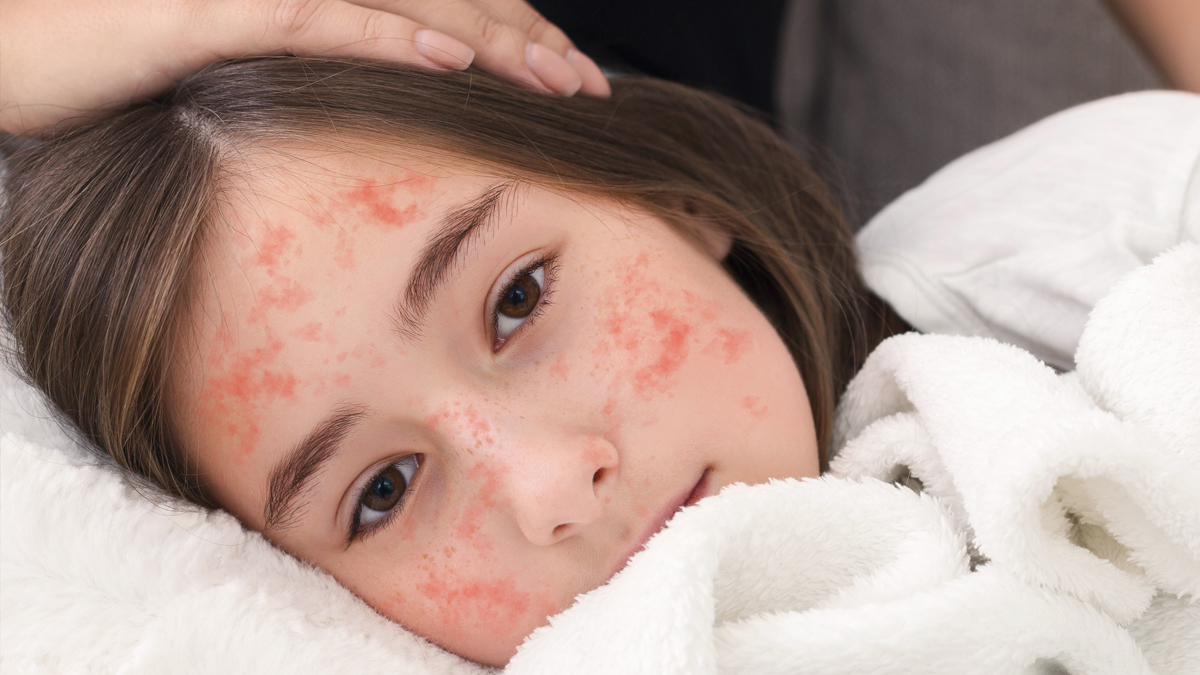
- The general public can find resources regarding vac- cines, including FAQs, child care and school vaccination requirements, information on the benefits and risks of vaccines and more at: dph.sc.gov/public/vaccinations. The site also shares information for health care providers, so they are aware of what to look for if someone presents with a rash and a fever, because, as Dr. Bell noted, “Measles has become so rare that many health care providers are not familiar with the presentation.” The website also links to other evidence-based references.
- The Centers for Disease Control and Prevention’s website is another great resource for monitoring measles outbreaks and serves as another vital resource for vaccination information: cdc.gov/measles/data-research/index.html
- American Academy of Pediatrics: aap.org/?srsltid=AfmBOopzVKJy4T0pMp4SQ0bxkOkJHBaf5sbp3q12vLq7bE490otgllZj
- Pediatric Infectious Disease Society: pids.org/education-training/vaccine-education-program/
- Nemours: Kids Health: kidshealth.org/en/parents/measles.html?ref=search
By Colin McCandless