

Turning Trauma Into Purpose
By Anne Toole
On a spring day in 2019, 21-year-old Nate Seawood was enjoying a day on the water with friends in Traverse City, Michigan. An avid photographer, he positioned himself at the front of the boat and was focused on capturing the perfect shot of the wakeboarder being pulled behind it. Like many photographers, he was searching for a better perspective.
He found one, though not in the way he ever imagined.
“When your eyes are in the lens, you lose perception of what’s going on around you,” Seawood recalled.
As he leaned to get a good shot, the boat hit a wave. He was thrown overboard and struck by the propeller.
“I ‘came to’ in the middle of the water and started swimming,” he said. “I tried to kick with my left leg, and there was a radiating heat sensation from my toes to my head. It was all still attached, but I knew there was definitely something wrong.”
A Life-Changing Boating Accident
The situation turned from a nice day on the boat into a race against time.
“My friends pulled me out of the water and used a tow rope to wrap around my leg as a tourniquet. They saved my life,” he said.
After initial treatment, he was transferred to University Hospital at the University of Michigan, where he spent 40 days and underwent 13 surgeries. Doctors tried to save his leg, but ultimately presented him with three options: remain wheelchair-bound for life, undergo a risky nerve graft procedure with uncertain results or choose an above-the-knee amputation.
“I knew my activity level. Being in a wheelchair isn’t what I wanted. I wanted to be in the best mental space and keep living my life, so I chose amputation,” he said.
By mid-July, he was discharged and moved back in with his parents while taking a semester off from college. Having always been active and athletic, he approached rehabilitation with determination and began learning to walk again after receiving his prosthetic leg that November.
When he returned to college in January 2020, he tried to pick up life where he had left off. It didn’t take long to realize that wasn’t possible.
“I got humbled really fast,” he said. “I had to accept that things were different. Mentally, that was the hardest bridge to cross.”
Finding Purpose After Trauma
The struggle sent him down a dark path. Angry, lost and uncertain about his future, he began making destructive choices.
“It’s crazy what trauma does to the brain. I didn’t really care what was going to happen with my life. Eventually, I got pulled over for drinking and driving and spent the night in jail. That was the turning point. God said, ‘You can take your life down this road, or you can take the other,’” he said.
He chose the other.
Seawood began rebuilding his physical strength and his sense of purpose. He finished college, rediscovered his passion for fitness and turned that passion into a career as a fitness trainer.
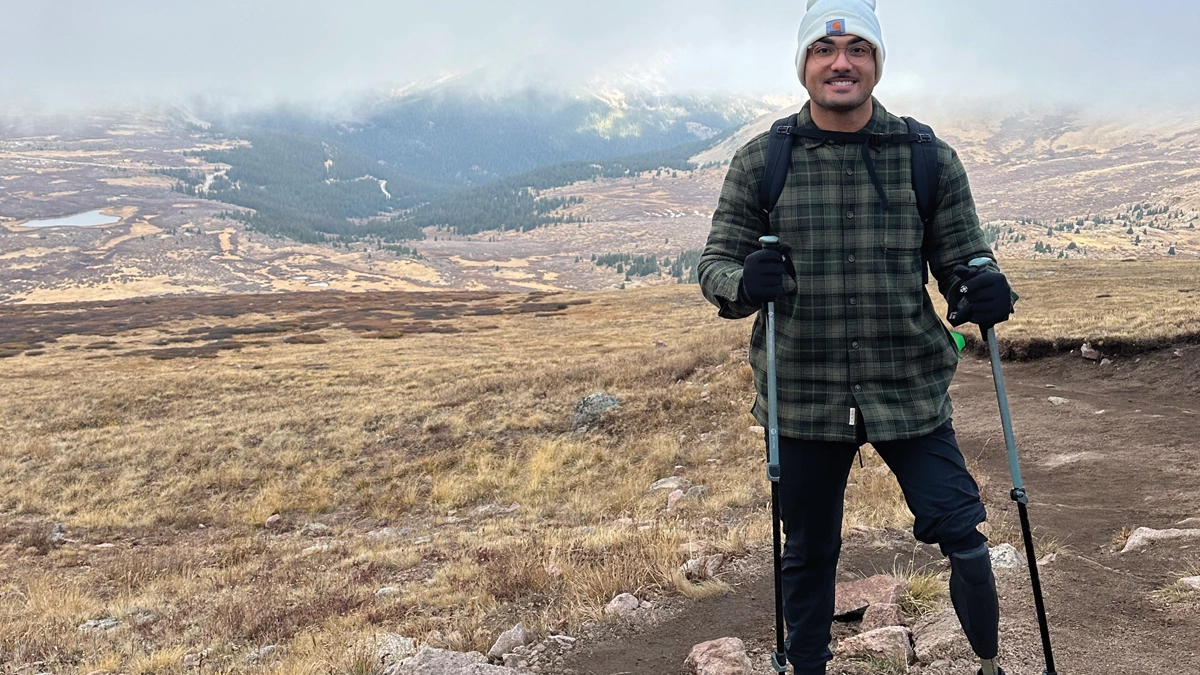
In 2023, Seawood moved to Charleston and has continued to push the limits of what many assume is possible for an amputee. He has completed a 5K, competed in fitness competitions and even hiked above 14,000 feet in Colorado.
Inspiring Others Through Resilience
Perhaps even more significant than his physical accomplishments has been his shift in perspective. What began as a personal battle evolved into a desire to help others facing their own hardships.
“How you respond in one moment isn’t going to effect just that moment,” Seawood said. “It’s a domino effect. It trickles down to everything else you experience in life.”
For years, he resisted being called “inspirational.”
“I used to turn people away if they told me I was inspiring to them,” he admitted. “I was just an average guy making it through my life.”
Today, he embraces the role.
“If someone can push themselves harder by looking at me, I’m all for it,” he said.
That commitment has led him to speak to groups about his experience and mentor individuals experiencing limb loss, including patients with diabetes or cancer, or who are recovering from accidents and military service injuries.
Now 28 years old, seven years after the boating accident, Seawood is preparing for his next challenge: opening Unity Athletic Club, a Charleston-area gym he is designing around accessibility, belonging and community.
Seawood is hoping to share what’s possible when adversity is met with purpose.